
Praseodymium neodymium carbonate
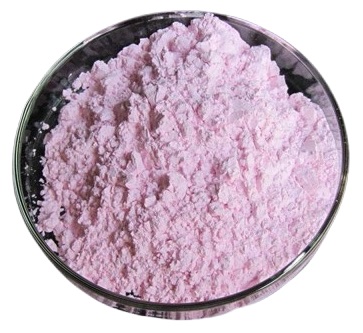
Praseodymium neodymium carbonate technical data:
| Item | (PrNd)x(CO3)y-75NdA | (PrNd)x(CO3)y-75NdB |
| REO(wt%) | ≥45.0 | ≥45.0 |
| Rare earth composition(wt%) | ||
| La2O3/REO | ≤0.05 | ≤0.03 |
| CeO2/REO | ≤0.05 | ≤0.03 |
| Pr6O11/REO | 25±2 | 25±2 |
| Nd2O3/REO | 75±2 | 75±2 |
| Sm2O3/REO | ≤0.03 | ≤0.03 |
| Y2O3/REO | ≤0.01 | ≤0.01 |
| Non-RE impurities(wt%) | ||
| Fe2O3 | ≤0.01 | ≤0.005 |
| CaO | ≤0.03 | ≤0.03 |
| Cl– | ≤0.05 | ≤0.05 |
| Al2O3 | ≤0.05 | ≤0.05 |
Application:
Praseodymium neodymium carbonate has various uses, mainly including the following aspects:
1. Optical glass: Praseodymium neodymium carbonate can be used as an additive in optical glass to prepare glass materials with high refractive index and high dispersion. This type of glass can be used to produce high-quality lenses, prisms, and optical devices, and is widely used in fields such as optical instruments, lasers, infrared sensors, and optical communications.
2. Infrared sensor: Praseodymium neodymium carbonate can be used as a detector material for infrared sensors due to its excellent thermoelectric performance and photoelectric conversion efficiency. This material can be used to prepare infrared thermal imagers, remote sensing observers, and environmental monitors.
3. Magnetic materials: Praseodymium neodymium carbonate can be mixed with other compounds to prepare magnetic materials, which have high magnetism and can be used to produce various magnetic devices and motors. In addition, praseodymium neodymium carbonate can also be used to prepare high-performance rare earth permanent magnet materials, which have high strength, high magnetic energy product, and excellent corrosion resistance. They are widely used in fields such as electric vehicles, maglev trains, and computer hard disk drives.
4. Optical amplifier: Praseodymium neodymium carbonate is an important material for preparing solid-state lasers and optical amplifiers. It can be used to prepare high-power Nd lasers and Nd lasers, with wide applications in industrial processing, medical devices, and communication fields.
5. Biomarker: Praseodymium carbonate can also be used as a biomarker for cell tracking and analysis in the biomedical field. It can be labeled with proteins or drug molecules and used for the preparation of medical imaging agents and analytical reagents.